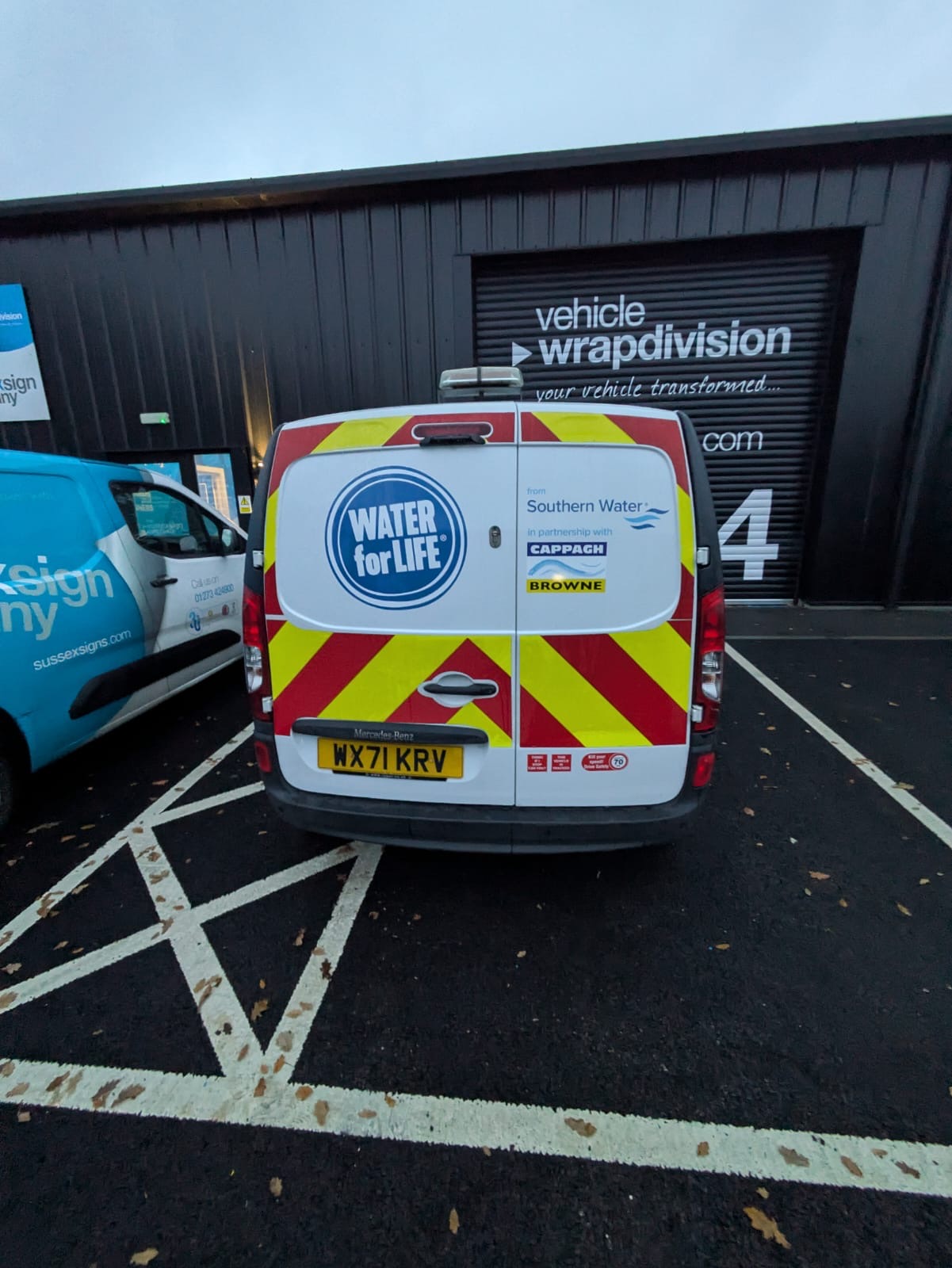
Chapter 8 Compliance for Fleet Managers
If your fleet operates on public roads, whether that's urban streets, rural routes, construction zones, or high-speed dual carriageways, visibility isn't just a courtesy, it's an expectation.
Chapter 8 isn't law, but it is the widely accepted standard used by National Highways, local authorities, utility companies, emergency services and major contractors. In practice, that means if your vehicle is working on or near the road network without the correct high-visibility markings, you may not be breaking legislation — but you could be exposing your business to avoidable risks.
Failure to follow Chapter 8 guidance can lead to vehicles being removed from site, failed audits, insurance complications or even liability issues if an incident occurs.
So while it's not a legal requirement in itself, Chapter 8 is very much the benchmark your fleet will be judged against and staying compliant protects your people, your brand and your operations.
That's why The Sussex Sign Company embeds fleet vehicle compliance into the process before any design, printing, or installation begins.
This blog gives you the clear, straightforward explanation Fleet Managers ask us for every week - based directly on our The Expert Guide for Fleet Managers (Q3: compliance section).
1. Start With a Fleet Vehicle Compliance Assessment Based on Type & Risk
Fleet vehicle compliance isn't one-size-fits-all.
That's why the very first step is understanding:
- ● Where your vehicles operate
- ● When they operate
- ● Their exposure level (roadsides, highways, night work, logistics routes)
- ● Whether they are leased or owned
- ● Any insurance-specific requirements
In the Fleet Guide, we explain that this early review prevents the classic problem of last-minute retrofits and costly errors.
For example:
- ● Highways and construction vehicles typically require Chapter 8 compliant high-vis chevrons.
- ● HGVs, trailers, and certain vans require ECE104 reflective contour tape for visibility in low light.
- ● Vehicles carrying hazardous goods may require ADR signage (ADR stands for "Accord Dangereux Routier," which translates from French to "Road Dangerous Goods Agreement").
This stage alone can prevent days of delay, rework, or non-compliance.
2. Chapter 8: What It Means & When You Need It
Chapter 8 Vehicle Markings applies to vehicles working on UK roads where they stop for inspections, maintenance, traffic management, or roadside services.
The goal is simple:
Make the vehicle unmistakably visible to other road users.
As per our Expert Guide:
We use high-visibility, prismatic reflective materials that meet Department for Transport (DfT) guidelines — no cheap alternatives, no colour approximations.
A compliant Chapter 8 setup normally includes:
- ✔ Red & yellow chevron panels
- ✔ High-visibility prismatic vinyl
- ✔ Correct sizing & placement
- ✔ No obstruction of logos or safety information
- ✔ Clean lines and accurate layout
The mistake many suppliers make?
Treating chevrons as a decorative pattern rather than a legal safety system.
For more information on Chapter 8 see our other post "Chapter 8 Chevrons Explained".
3. ECE104: Reflective Tape for HGVs & Larger Vans
Within any fleet vehicle compliance audit, ECE104 Reflective Markings is the regulation designed to improve night-time visibility for:
- ● HGVs
- ● Trailers
- ● Luton vans
- ● Long-wheelbase vehicles
The regulation requires:
- ✔ Reflective contour tape on the vehicle outline
- ✔ Specific widths and colour options
- ✔ Proper placement on rear, sides, and sometimes front
In our Fleet Guide, we explain how we specify materials from leading brands to guarantee visibility and legal compliance.
This is not optional, it's required for many commercial fleet vehicle compliance checks and can be audited during roadside inspections.
4. Load-Specific Safety Signage (ADR, Hazardous Goods, etc.)
If your vehicles carry:
- ● Gas
- ● Chemicals
- ● Flammables
- ● Specialist industrial loads
…your signage must reflect this with correct and legally sized hazard plates, decals, and warnings.
Our Fleet Guide warns against suppliers who apply generic or outdated hazard labels, this creates compliance risk AND operational liability.
We manage this by documenting each requirement inside your Fleet Branding Policy, so nothing is ever applied incorrectly.
5. Fleet Vehicle Compliance Only Works if It's Consistent
A single compliant vehicle isn't enough.
Your entire fleet needs:
- ✔ Consistent materials
- ✔ Consistent placement
- ✔ Consistent sizing
- ✔ Consistent spec sheets
- ✔ Consistent installation quality
That's why The Sussex Sign Company assigns a central project manager for fleet accounts, as stressed in the branding policy and compliance sections of the Fleet Guide.
This ensures every vehicle:
- ● Passes audits
- ● Looks uniform
- ● Reflects your brand correctly
- ● Meets operational safety standards
No matter the branch.
No matter the installer.
No matter the timeline.
6. Keeping Fleet Vehicles Compliant Over Time, Repairs & Maintenance
Compliance isn't "fit and forget".
Chevrons fade.
Reflective tape can get damaged.
Panels get scraped, dented, or replaced.
In the Fleet Guide, we explain how we manage repairs with:
- ● Material matching
- ● Rapid turnarounds
- ● Correct reflective replacements
- ● Panel-only repairs where possible
This minimises downtime while keeping your fleet road-legal and consistent. And yes, we maintain your design files and fleet vehicle compliance specs so repairs are always accurate.
7. The Biggest Fleet Compliance Mistake to Avoid
Many Fleet Managers tell us they used to rely on multiple installers or generic signwriters.
The problem?
Every installer "interprets" the rules differently.
This leads to:
- ❌ Mixed quality
- ❌ Failed audits
- ❌ Incorrect chevron patterns
- ❌ Wrong reflective materials
- ❌ Inconsistent layouts
- ❌ Lost time chasing suppliers
The Fleet Guide calls this out directly:
Fleet vehicle compliance cannot be left to interpretation. It must be baked into your branding policy and managed by a single accountable partner.
Your Fleet Compliance Checklist
Here's a quick summary for Fleet Managers:
- ✔ Do I know which vehicles require Chapter 8?
- ✔ Do I know which require ECE104?
- ✔ Are my materials DfT and ECE compliant?
- ✔ Do all vehicles follow a consistent, documented layout?
- ✔ Are repairs done with the correct reflective materials?
- ✔ Is compliance proactively managed — not reactive?
If you can't tick these off, you're at risk of downtime, fines, or brand inconsistency.
How We Help Fleet Managers Stay Compliant, Without the Stress
Our Fleet-First Advantage system is designed to:
- ✔ Assess compliance needs upfront
- ✔ Document everything in your Fleet Branding Policy
- ✔ Use correct materials for Chapter 8 and ECE104
- ✔ Apply consistent standards across all vehicles
- ✔ Provide fast repairs and accurate replacements
- ✔ Keep you updated, no chasing, no firefighting
It's fleet vehicle compliance done properly.
And it gives Fleet Managers something invaluable:
Operational peace of mind.